Campus and Program Customer Service Is Culture in Action

We’re hearing a lot lately about the growing importance of “customer service” in Texas public schools.
And honestly… it makes sense.
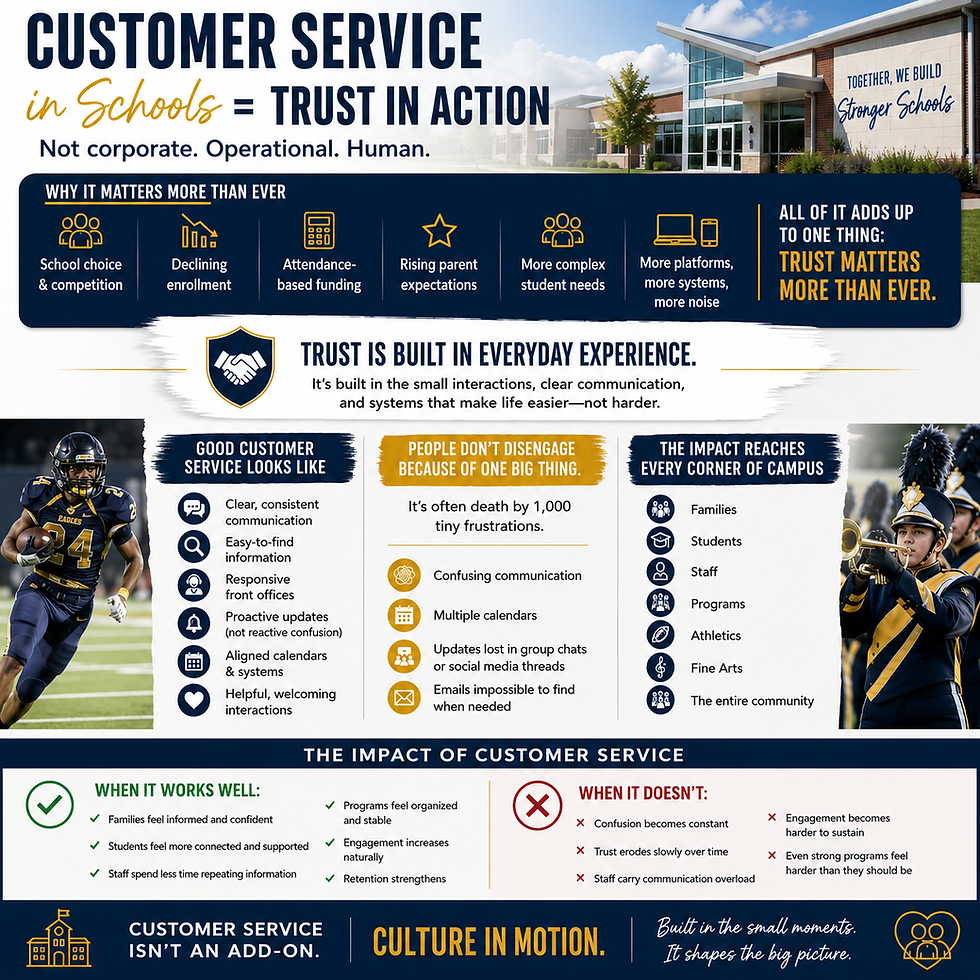
School choice
Declining enrollment
Attendance-based funding
Higher parent expectations
More complex student needs
More platforms, more systems, more information, more noise
All of it adds up to one thing: trust matters more than ever.
And in schools, trust isn’t built in big announcements or major initiatives.
It’s built in everyday experience.
Good customer service in schools isn’t corporate - it’s operational clarity and human responsiveness:
clear, consistent communication
information that’s easy to access
front offices that feel helpful instead of overwhelmed
and systems that reduce confusion instead of adding to it
Because students and families don’t usually disengage because of one big issue. It’s often death by 1,000 tiny frustrations.
confusing communication
Multiple calendars
Updates buried in comment threads
Emails that disappear the moment you need them
Over time, those small breakdowns don’t just create frustration - they shape perception, as well as how people experience a campus or program. And the impact is real on both sides.
When customer service is strong:
families feel informed and confident
students feel more connected and supported
staff spend less time re-explaining information
and programs feel organized, stable, and easier to stay engaged with
When it’s not:
confusion increases
trust erodes slowly
staff carry the weight of constant clarification
and even strong programs can feel harder to sustain
This is why customer service is no longer just an “extra” in public education - it’s part of how organizational culture is experienced every day.
Culture isn’t only built at concerts, games, or major events. It’s built in the emails that get answered, the systems that make sense, and the small interactions that either build trust… or quietly chip away at it.